Big Tech Is Spending $700 Billion on Infrastructure. Here's How It Will Reshape Real Estate.
Amazon, Google, Meta, and Microsoft are pouring hundreds of billions into data centers and AI infrastructure. This spending wave is already transforming local housing markets, land values, and rental demand across the country.
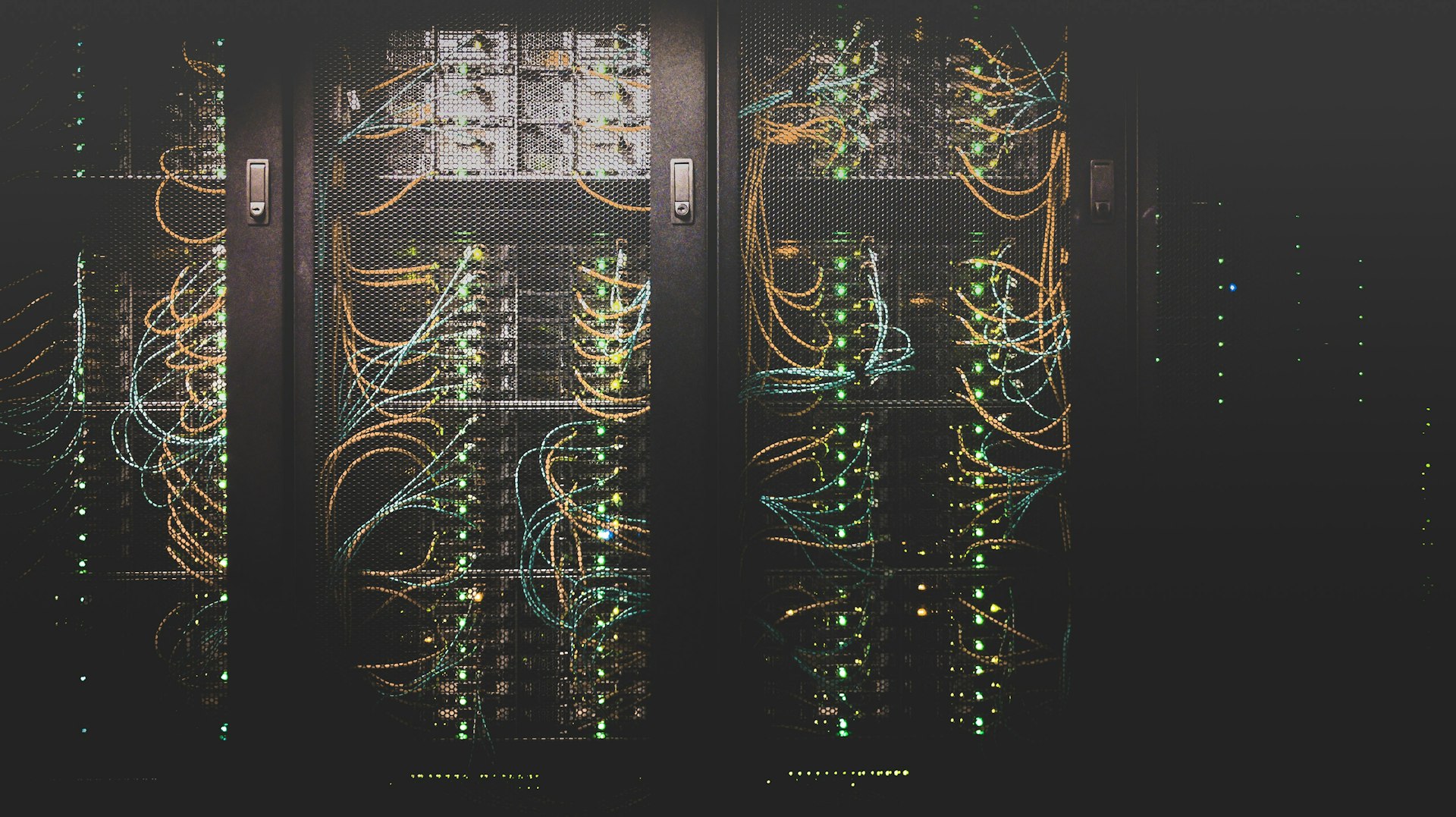
The numbers are staggering. In 2026, Amazon, Google, Meta, and Microsoft are on track to spend a combined $700 billion on capital expenditures, the vast majority flowing into data centers and AI infrastructure. Amazon alone has committed $200 billion this year. Google is spending up to $185 billion. Meta's total expenses are projected between $115 billion and $135 billion.
This is not a temporary blip. Hyperscaler capital expenditure in 2026 represents a 36% increase over 2025, and industry analysts estimate North America could see $1 trillion in new data center investment between 2025 and 2030.
For real estate investors, this wave of spending is already creating measurable effects on housing markets, land values, construction costs, and rental demand in communities across the country.
Where the money is going
Roughly 75% of big tech's capital spending is directly tied to AI infrastructure: servers, GPUs, and the data centers that house them. These facilities are massive. A single campus can consume as much electricity as 100,000 homes and require millions of gallons of water daily for cooling.
The traditional hub for data centers is Northern Virginia's "Data Center Alley," centered around Loudoun County, which now hosts over 4,900 MW of capacity. But power constraints in primary markets are pushing expansion into new territory.
Secondary and emerging markets seeing major data center growth include:
- West Texas — Gigawatt-scale pre-leasing activity in formerly rural areas
- Salt Lake City, Des Moines, Reno — 20-40% year-over-year land price increases
- Midwest corridors (Iowa, Nebraska, Indiana) — Abundant land and government tax incentives attracting AI infrastructure
- Kuna, Idaho — Meta's giant new data center campus outside Boise
- Parts of rural Virginia — Expansion beyond the saturated Loudoun County corridor
This geographic spread means the real estate effects are not limited to the usual tech corridors. Towns that have never dealt with large-scale commercial development are now negotiating with some of the wealthiest companies in the world.
How data centers affect local housing markets
The impact on residential real estate is more nuanced than you might expect. It is neither purely positive nor purely negative, and it plays out differently depending on the phase of development.
During construction: a temporary boom
Data center construction creates a surge in local economic activity. Construction workers on these projects are earning 25-30% more than in previous jobs, with salaries often exceeding $100,000 and some topping $200,000. Project managers average $165,000.
This wage spike has a multiplier effect. Workers need housing, food, transportation, and services. In small towns, this can feel like a gold rush.
The real estate effects during construction:
- Rental demand spikes as temporary workers flood the area, tightening vacancy and pushing up rents
- Short-term rental income increases for property owners near construction sites
- Local construction costs rise across all sectors as contractors compete for the same skilled labor pool, making residential construction more expensive
- Housing construction faces delays as electricians, HVAC specialists, and other trades are pulled toward higher-paying data center work
After construction: a different picture
Here is where investors need to pay attention. Data centers are capital-intensive, not labor-intensive. Once built, a massive facility might employ only 30-50 full-time workers. The construction boom fades, and the economic impact shifts.
The longer-term effects include:
- Property tax revenue increases for local governments, potentially offsetting residential property taxes
- Land values remain elevated near established data center corridors
- Residential values near data centers tend to hold or increase — a George Mason University study found that homes closer to data centers in Northern Virginia commanded higher sales prices across all property types
- But housing supply may be constrained as data center developers outbid residential developers for land
The Virginia case study
Northern Virginia provides the clearest picture of what long-term data center concentration does to local real estate.
Loudoun County: The median home price is $810,000, up 8% year-over-year. The average home price stands at $983,625, representing a greater than 12% increase since 2023. Land prices have surged up to 45%, with industrial land trading above $4 million per acre.
Prince William County: Land prices have risen 38%, with data center developers pushing land to nearly $1 million per acre in some areas. However, the median home price is $550,000, down 5% year-over-year, with listings jumping 68%, suggesting a more complicated picture for residential values in areas with heavy data center concentration.
Data centers contribute approximately $9.1 billion annually to Virginia's economy. But the benefits are not evenly distributed. Housing developers who intended to build affordable units have been outbid by data center companies willing to pay far more for the same land, contributing to a growing shortage of attainable housing.
The grid problem and what it means for housing
Data centers do not just compete for land. They compete for electricity.
In PJM grid territory covering Virginia, Ohio, and Illinois, data centers accounted for 63% of a $14.7 billion capacity bill, with costs passed to consumers through higher utility bills. In some regions, grid constraints have temporarily halted new residential approvals because there simply is not enough power to go around.
London experienced this firsthand when data center energy demand temporarily stopped approximately 12,000 new housing units from being approved in west London.
For real estate investors, this has practical implications:
- Properties in power-constrained areas may face slower new supply, which supports existing property values and rental rates
- Utility costs for tenants may rise, which can indirectly affect what tenants are willing to pay in rent
- New construction timelines may extend in areas where data centers are consuming available grid capacity
Opportunities for real estate investors
Despite the complexities, this infrastructure boom creates identifiable opportunities.
1. Rental properties in data center construction zones
The construction phase of a major data center campus can last 2-5 years. During this period, the local rental market tightens significantly as thousands of construction workers need housing. If you own rental property in or near a market where a major data center project is announced, expect stronger occupancy and rent growth during the build-out.
Markets to watch: Rural Virginia, West Texas, central Indiana, parts of Iowa and Nebraska where gigawatt-scale projects are being planned.
2. Secondary markets benefiting from the ripple effect
As data center companies move into secondary markets, they bring infrastructure improvements: better roads, upgraded power systems, expanded broadband. These improvements benefit all real estate in the area, not just the data center site.
Secondary markets like Salt Lake City, Des Moines, and Reno are already seeing land prices rise 20-40% year-over-year. Residential values tend to follow as improved infrastructure makes these areas more attractive for broader economic development.
3. Industrial and commercial property near data center corridors
An estimated 24% of all industrial-zoned development site acquisitions in the last two years were for data center development. This is reducing the supply of industrial land and driving up values for remaining industrial properties.
If you hold industrial or commercial property near known data center corridors, the land value alone may be appreciating faster than you realize.
4. Housing in markets where data centers generate tax revenue
Some jurisdictions use data center tax revenue to reduce residential property tax burdens. This makes housing more affordable in those areas, which can attract population growth and support long-term property values.
Risks to understand
This is not a one-way bet. There are real risks.
Boom-bust dynamics
Construction booms are temporary. A town that adds 3,000 construction workers for three years and then loses them can see rental vacancy spike and property values stagnate. Investors who bought at peak construction demand may find themselves with vacant units when the project completes.
Community pushback and regulatory risk
Residents in many areas are pushing back against data center development. Concerns about noise, water usage, energy consumption, and the limited number of permanent jobs are leading to stricter zoning rules and moratoriums in some jurisdictions. A data center project that gets blocked or downsized after you have already invested nearby is a real risk.
Technology risk
The current boom is driven by AI demand. If AI spending decelerates or the technology evolves to require less physical infrastructure, the growth projections that justify these investments could soften. Data centers often rely on a small number of specialized tenants, primarily hyperscalers, whose future profitability depends on rapidly evolving technology.
Utility cost inflation
Rising utility costs driven by data center energy demand can affect the economics of rental properties. Higher electric bills for tenants can reduce what they are willing to pay in rent, compressing your margins.
How to evaluate data center impact on your investments
When analyzing a property in or near a data center market, add these factors to your due diligence.
Track announced projects
Major data center projects are typically announced publicly. Track announcements from Amazon, Google, Meta, Microsoft, and Oracle in your target markets. A new project announcement can signal 2-5 years of construction activity and its associated economic effects.
Assess the construction timeline
Understand where a project is in its lifecycle. Early-stage construction means the rental demand surge is ahead of you. Late-stage or completed projects mean the construction workers are leaving.
Monitor grid capacity
Check whether your target area has power constraints. Markets with limited grid capacity will see slower new housing supply, which supports existing property values but may also face higher utility costs.
Evaluate land use competition
In areas with active data center development, check whether residential land is being converted or acquired for data center use. This reduces future housing supply, which can support property values but also signals potential community tension.
Factor utility trends into cash flow projections
If data centers are driving up local energy costs, adjust your expense projections accordingly. A property that cash-flows well today might look different with 15-20% higher utility costs over the next few years.
Key takeaways
-
The spending is unprecedented. Big tech is investing roughly $700 billion in 2026 alone, with $1 trillion expected in North America data center investment by 2030.
-
Geographic impact is spreading. Power constraints in primary markets are pushing data centers into secondary and rural areas, creating new real estate dynamics in communities that have never experienced this type of development.
-
Construction phases create temporary rental booms. Workers earning six-figure salaries need housing, tightening local markets during the 2-5 year build-out period.
-
Long-term effects are mixed. Property values near data centers tend to hold or increase, but housing affordability can suffer as developers compete for land and grid capacity.
-
Due diligence matters more than ever. Understanding where a data center project is in its lifecycle, what it means for local infrastructure, and how it affects housing supply will separate informed investors from those chasing headlines.
Make smarter investment decisions
Whether you are evaluating property in a data center boomtown or a market that has not yet been affected, the fundamentals still matter. Cash flow, debt coverage, break-even ratios, and vacancy assumptions are what determine whether a deal works.
Get started free and run the numbers on properties in any market, including the ones being reshaped by big tech's infrastructure spending.
Sources
- Tech AI Spending Approaches $700 Billion in 2026 — CNBC
- AI Spending Boom Accelerates: Big Tech to Invest $400 Billion in 2025 — IEEE ComSoc
- Hyperscaler Capex > $600 Billion in 2026 — IEEE ComSoc
- 2026 AI Investments Totaled: Amazon, Microsoft, Meta, Google — Fast Company
- 2026 Global Data Center Outlook — JLL
- Data Centers Account for Nearly a Third of Global Real Estate Investment in 2025 — Data Center Dynamics
- Data Centers Are Commercial Real Estate's Jewel for 2026 — Data Center Knowledge
- U.S. Real Estate Market Outlook 2026 — Data Centers — CBRE
- The Data Center Balance: How US States Can Navigate Opportunities and Challenges — McKinsey
- Turning the Data Center Boom Into Long-Term Local Prosperity — Brookings Institution
- Study: Home Prices Are Higher When the House Is Near a Data Center — George Mason University
- Could Data Centers Harm the US Housing Market? — Mortgage Professional America
- Data Center Land Deals: Why Prices Are Skyrocketing — Datacenters.com
- Construction Workers Earning Up to 30% More in Data Center Boom — Fortune
- Data Center Boom Pushes Prince William Land to Nearly $1M an Acre — Data Center Frontier
- 8 U.S. Data Center Trends for 2026 — Acres Land Values
- Tech Giants Are Pouring Billions Into AI Data Centers — Entrepreneur